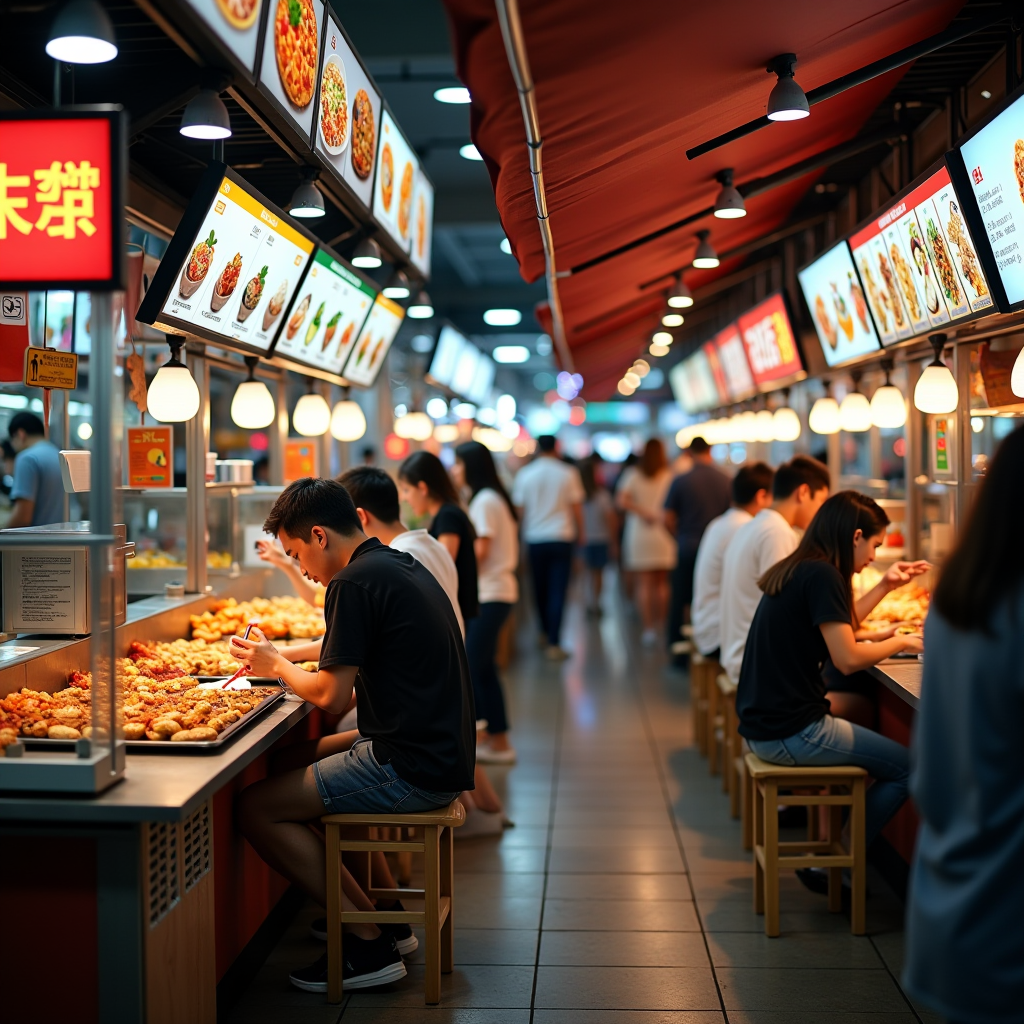
The Digital Awakening of Hawker Culture
For decades, Singapore's hawker centers have operated on a simple premise: cash transactions, handwritten orders, and face-to-face interactions between vendors and customers. These bustling food courts, recognized by UNESCO as part of Singapore's intangible cultural heritage, have been bastions of tradition in an increasingly digital city-state.
However, the landscape began shifting dramatically in recent years, accelerated by the global pandemic and changing consumer expectations. Today, visitors to hawker centers across Singapore are increasingly likely to encounter QR codes on tables, digital menu boards, and vendors equipped with mobile payment terminals.
The transformation is not merely cosmetic. According to recent surveys, over 65% of hawker stalls now accept at least one form of digital payment, compared to less than 30% just three years ago. This represents a fundamental shift in how these traditional establishments conduct business, driven by both government initiatives and grassroots adoption.
The National Environment Agency (NEA), which oversees hawker centers, has been instrumental in facilitating this transition. Through various programs and subsidies, the agency has helped vendors adopt digital solutions while ensuring that the essence of hawker culture remains intact. The goal is not to replace tradition but to enhance it with modern convenience.
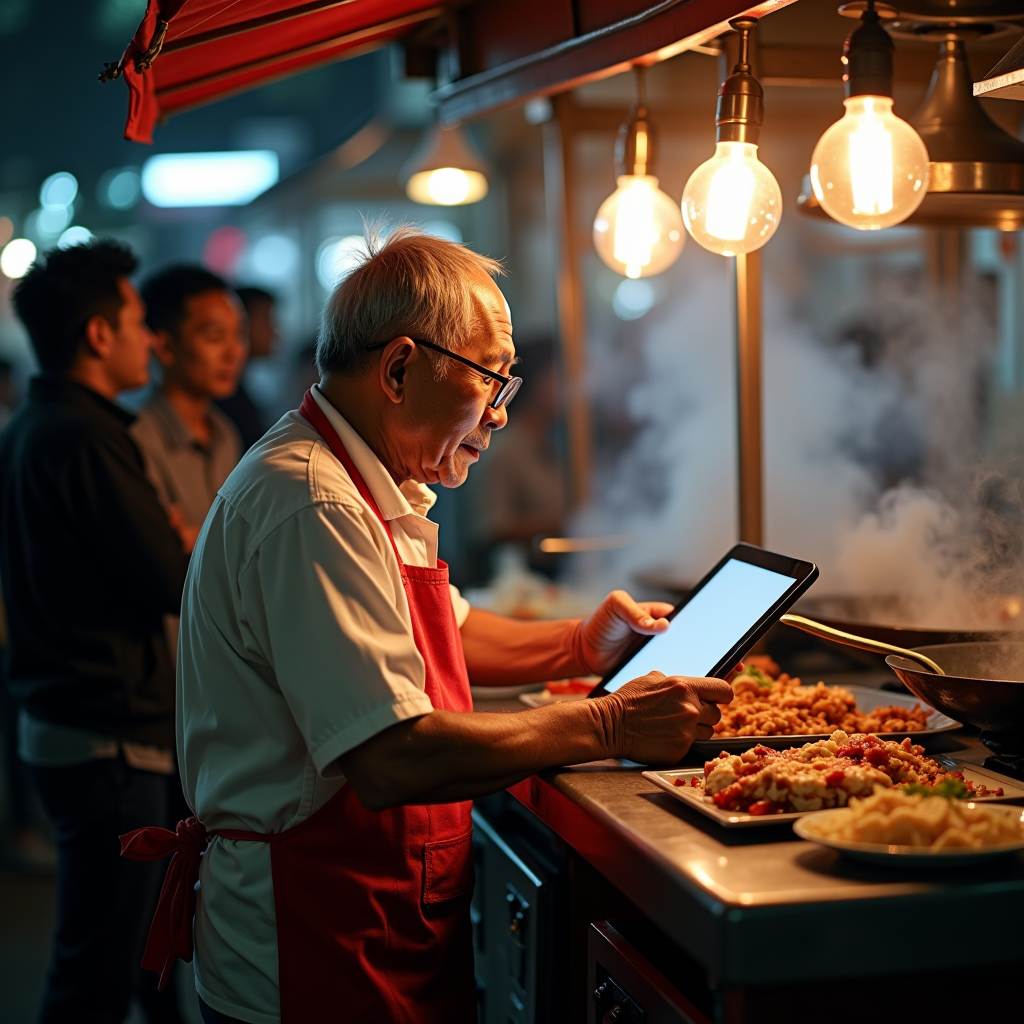
Hawker vendors of all ages are adapting to digital ordering systems, bridging the gap between tradition and technology.
QR Codes and Digital Menus: Ordering Reimagined
One of the most visible changes in hawker centers is the proliferation of QR codes. These square barcodes, once foreign to the hawker experience, now adorn tables and stall fronts throughout Singapore's food courts. Customers can scan these codes with their smartphones to access digital menus, place orders, and even make payments without queuing at individual stalls.
The implementation of QR code ordering systems has brought several practical benefits. During peak hours, when hawker centers are packed with office workers and families, digital ordering helps reduce congestion at popular stalls. Customers can browse menus at their leisure, place orders from their seats, and receive notifications when their food is ready for collection.
Multilingual Accessibility and Customization
Digital menus have also addressed a long-standing challenge in Singapore's multicultural society: language barriers. Traditional hawker stalls often display menus in one or two languages, typically English and Chinese, Malay, or Tamil. Digital platforms can offer instant translation into multiple languages, making hawker food more accessible to tourists and residents from diverse linguistic backgrounds.
Moreover, digital ordering systems allow for greater customization. Customers can specify dietary preferences, adjust spice levels, and request modifications with greater precision than verbal communication sometimes allows. This level of detail helps reduce misunderstandings and ensures that customers receive exactly what they want.

QR code menus have become commonplace in Singapore's hawker centers, offering convenience while maintaining the traditional dining atmosphere.
The Cashless Revolution: Mobile Payments Take Hold
Perhaps the most significant technological shift in hawker centers has been the widespread adoption of cashless payment systems. PayNow, GrabPay, FavePay, and various other digital wallets have become as common as cash at many stalls, fundamentally changing the transaction experience.
The government's push toward a cashless society has been a major driver of this change. Through the Hawkers Go Digital program, the NEA provided subsidies and support to help vendors adopt digital payment solutions. The initiative aimed to equip all hawker stalls with at least one digital payment option, a goal that has been largely achieved.
For vendors, the benefits of cashless payments extend beyond mere convenience. Digital transactions reduce the risk of theft, eliminate the need for handling large amounts of cash, and simplify accounting processes. Many vendors report that digital payment systems have made end-of-day reconciliation faster and more accurate.
Bridging the Digital Divide
However, the transition to cashless payments has not been without challenges. Many hawker vendors, particularly older generations who have operated their stalls for decades, initially struggled with the technology. Training programs and ongoing support have been crucial in helping these vendors adapt to digital systems.
The NEA and various community organizations have conducted workshops and provided one-on-one assistance to help vendors navigate digital payment platforms. These efforts have been essential in ensuring that the digital transformation is inclusive and doesn't leave behind those less comfortable with technology.
Interestingly, many younger family members have stepped in to help their parents and grandparents manage digital systems. This intergenerational collaboration has become a common sight in hawker centers, with tech-savvy children teaching their elders how to use tablets and payment terminals during off-peak hours.

Mobile payment systems have become standard at hawker stalls, offering convenience for both vendors and customers.
Preserving Community and Cultural Heritage
Despite the technological advances, there remains a strong commitment to preserving the cultural heritage and community atmosphere that define hawker centers. The challenge lies in integrating modern conveniences without eroding the social fabric that makes these spaces special.
Hawker centers have always been more than just places to eat; they are community gathering spots where people from all walks of life come together. The informal atmosphere, the banter between vendors and regular customers, and the shared tables that encourage interaction with strangers are all integral to the hawker experience.
Recognizing this, technology implementation has been carefully calibrated to enhance rather than replace human interaction. While digital ordering is available, most hawker centers still encourage customers to visit stalls directly, especially during less busy periods. Many vendors maintain that personal interaction is essential to their business and the overall hawker culture.
The Role of Architecture and Design
The physical design of hawker centers has also evolved to accommodate technology while maintaining traditional aesthetics. New and renovated hawker centers incorporate charging stations, improved Wi-Fi connectivity, and digital displays, but these modern elements are integrated thoughtfully to complement rather than dominate the space.
Traditional elements such as open-air layouts, communal seating arrangements, and the distinctive architecture of hawker stalls remain unchanged. The goal is to create spaces where technology serves as a tool for convenience without fundamentally altering the character and atmosphere that make hawker centers unique.

Hawker centers continue to serve as vital community spaces where families and friends gather, regardless of technological changes.
Challenges and Concerns
The digital transformation of hawker centers has not been without its critics and challenges. Some purists argue that technology diminishes the authentic hawker experience, creating a barrier between vendors and customers. There are concerns that the personal touch and human connection that characterize hawker culture may be lost in the pursuit of efficiency.
Additionally, there are practical concerns about digital exclusion. While Singapore has high smartphone penetration rates, not all customers are comfortable with or have access to digital payment methods. Elderly patrons, in particular, may prefer cash transactions and face-to-face ordering. Ensuring that traditional methods remain available alongside digital options is crucial for inclusivity.
Data privacy and security are also considerations. As hawker centers adopt digital systems that collect customer information and transaction data, questions arise about how this information is stored, used, and protected. Vendors and platform providers must navigate these concerns while building trust with customers.
Balancing Efficiency and Experience
Another challenge is finding the right balance between operational efficiency and the leisurely, social nature of hawker dining. While digital systems can speed up ordering and payment, there's a risk that they might encourage a more transactional, rushed experience that contradicts the traditional hawker center ethos of taking time to enjoy food and company.
Some hawker centers have addressed this by implementing hybrid models where digital ordering is available but not mandatory. Customers can choose their preferred method of ordering and payment, ensuring that technology serves as an option rather than an obligation.
Looking Ahead: The Future of Hawker Centers
As Singapore's hawker centers continue to evolve, the focus remains on sustainable integration of technology that respects and preserves cultural heritage. Future developments may include more sophisticated data analytics to help vendors optimize their operations, augmented reality features that provide information about dishes and their cultural significance, and enhanced sustainability measures through digital tracking of food waste and resource usage.
The government has indicated that support for digital transformation will continue, with new initiatives aimed at helping hawker centers become more resilient and adaptable to changing consumer preferences. However, there is also recognition that the pace of change must be manageable and that the human element of hawker culture must be protected.
Younger generations of hawkers, many of whom are taking over family businesses or starting new ventures, are generally more comfortable with technology and see it as a natural part of modern business operations. This generational shift may accelerate digital adoption while bringing fresh perspectives on how to maintain cultural authenticity in a digital age.
A Model for Cultural Preservation
Singapore's approach to digitizing hawker centers while preserving their cultural essence may serve as a model for other countries grappling with similar challenges. The key lesson is that technology and tradition need not be mutually exclusive; with thoughtful implementation and community involvement, they can coexist and even enhance each other.
The success of this transformation will ultimately be measured not just by adoption rates or efficiency gains, but by whether hawker centers continue to serve as vibrant community spaces that reflect Singapore's multicultural identity and culinary heritage. As long as the focus remains on people rather than just technology, hawker centers are likely to thrive in the digital age while maintaining the qualities that make them special.
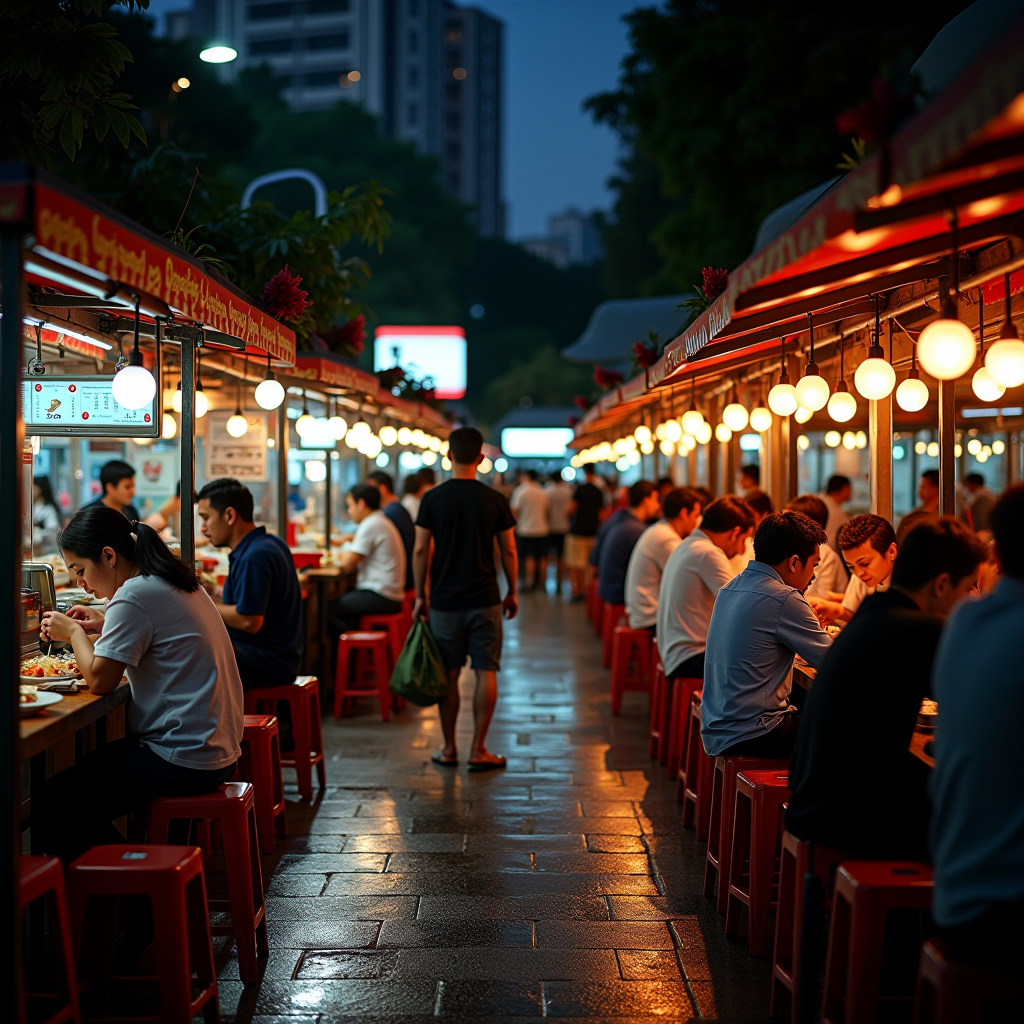
Singapore's hawker centers are successfully blending tradition with technology, creating spaces that honor the past while embracing the future.
Conclusion
The digital transformation of Singapore's hawker centers represents a delicate balancing act between progress and preservation. As QR code menus and mobile payment systems become increasingly common, the challenge is to ensure that these technological advances enhance rather than diminish the cultural heritage and community atmosphere that make hawker centers integral to Singaporean life.
Through careful implementation, community involvement, and a commitment to inclusivity, Singapore is demonstrating that it's possible to modernize traditional institutions without sacrificing their essential character. The hawker centers of today are evolving spaces where technology serves as a tool for convenience and efficiency, but where the heart of the experience remains rooted in good food, affordable prices, and the simple pleasure of sharing a meal with others.
As this transformation continues, the success of Singapore's hawker centers will depend on maintaining this balance—embracing innovation while honoring tradition, adopting efficiency while preserving community, and moving forward while staying connected to the past. In doing so, these beloved institutions can continue to serve as living examples of how cultural heritage can thrive in the modern world.